


Every year, thousands of overseas Pakistanis lose money to bad investments, fraudulent agents, and rushed decisions. Not because they were careless. Because nobody gave them a clear, honest process to follow. This guide explains exactly how to buy property in Pakistan from overseas, step by step, with every legal check, every document, and every payment method laid out plainly. If you are investing from the UK, UAE, USA, Canada, or anywhere else, this is the process that protects your money.
Why Overseas Pakistanis Are Investing in Pakistan Real Estate Right Now
The rupee exchange rate gives overseas Pakistanis genuine purchasing power that local buyers simply do not have. When you earn in GBP or AED and invest in PKR, your capital goes substantially further. That advantage, combined with steady property appreciation in cities like Lahore, makes Pakistan real estate one of the more rational investments available to NRP buyers right now.
Beyond financial logic, there is the retirement reality. Many overseas Pakistanis plan to return. Owning a plot or home before that return removes enormous financial pressure later. Buying now, at today’s prices, on an installment plan, is significantly cheaper than buying at market price in five to ten years.
Lahore in particular attracts NRP investment because its gated communities are well-documented, its LDA approval processes are transparent, and multiple areas offer installment plans that work with overseas income cycles.

Can Overseas Pakistanis Legally Buy Property in Pakistan from Abroad?
Yes. Overseas Pakistanis holding a NICOP or POC have full property ownership rights in Pakistan, identical to resident citizens. They can purchase residential and commercial property without restrictions. The complete process, including document verification, payment, and registration, can be managed remotely through a Power of Attorney and official banking channels approved by the State Bank of Pakistan.
Documents You Need Before Buying Property in Pakistan from Overseas
Gather these before you start any property search. Missing even one causes delays that are significantly harder to resolve from abroad.
Your NICOP or POC is your primary identity document. It must match your NADRA records exactly. Spelling differences between your NICOP and any land record or bank document will slow every subsequent step. Check your NADRA records before you begin.
You also need a National Tax Number (NTN) from the Federal Board of Revenue. Property registration in Pakistan requires a valid NTN. You can register for one online through the FBR portal. Without an NTN, you cannot legally complete a property transaction.
A Pakistani bank account is required to receive and transfer funds. Most major Pakistani banks offer NRP account schemes that accommodate overseas remittances. The State Bank of Pakistan’s Roshan Digital Account provides an additional layer of convenience and legal protection specifically for NRP investors.
Finally, prepare a specific Power of Attorney if you cannot travel to Pakistan. This document authorises a named person to act on your behalf for a defined set of transactions. Draft it in your country of residence, notarise it, and get it attested at the Pakistan Embassy or Consulate.
Step-by-Step: How to Buy Property in Pakistan from Overseas
Step 1 – Choose Your Location and Property Type
Start with the type of property that matches your goal. If you want rental income, commercial plots in high-footfall areas generate higher yields. If you want capital appreciation with lower entry cost, residential plots in emerging corridors deliver better returns relative to price.
For NRP investors targeting Lahore, Royal Properties’ residential and commercial plots on Pine Avenue Lahore in Eden Abad offer an LDA-adjacent entry point at prices that DHA and Bahria Town cannot match. The 2.5 Marla residential plots in the VIP Block of Eden Abad are particularly well-suited for NRP buyers who want verified land ownership on a fast-developing government-backed corridor.
Compare at least three options before deciding. Request video walkthroughs, drone footage, and geotagged photographs. If you cannot visit in person, your shortlist must be inspected physically by your Power of Attorney holder before any payment.
Step 2 – Verify the NOC and Fard
This step determines whether your money is safe. Do not skip it. Do not rush it.
The No Objection Certificate (NOC) confirms that the housing society received legal approval from LDA or the relevant development authority. Ask the developer for the NOC number. Verify it independently on the LDA website at lda.gop.pk. Any developer who resists this request is a reason to stop the transaction immediately.
The Fard is the official land revenue record. It confirms that the specific plot you intend to buy is free of dispute, free of mortgage, and free of litigation. Request the Fard from your Power of Attorney holder. Review it before signing any agreement.
Step 3 – Appoint Your Power of Attorney
A Power of Attorney (POA) authorises a named person to sign documents, make payments, and complete registration on your behalf. Draft a specific POA that limits the authority to defined actions only. A general POA with unlimited authority creates unnecessary risk.
Get the POA notarised in your country of residence. Take it to the nearest Pakistan Embassy or Consulate for attestation. Once attested, your representative registers it in Pakistan before they can act on your behalf legally.
Choose this person carefully. Many overseas buyers experience losses not from fraudulent developers but from trusted relatives who misused POA authority. If you do not have a reliable family contact, Royal Properties provides full transactional support for NRP clients.
Step 4 – Use a Secure Payment Channel
All property payments in Pakistan must go through official, traceable banking channels. This protects you legally at every future stage, including resale, inheritance transfer, and tax compliance.
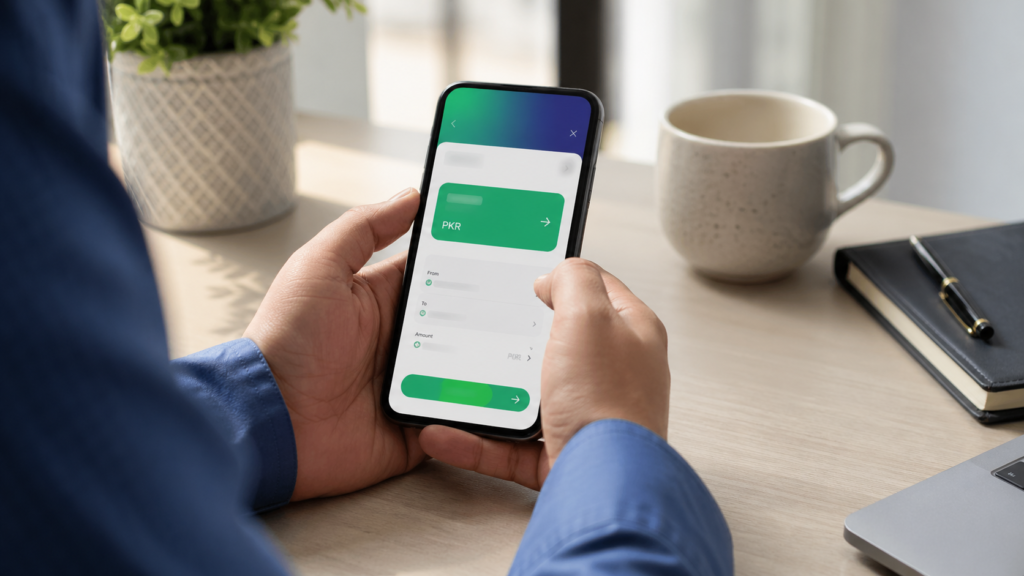
The most secure option for NRP investors is the State Bank of Pakistan’s Roshan Digital Account. It is specifically designed for overseas Pakistanis and allows property investment directly from abroad with full documentation of the fund transfer.
Standard bank-to-bank international transfers are also acceptable, provided you obtain a Foreign Remittance Certificate from your sending bank. This certificate is significant: it exempts you from certain withholding taxes at the time of registration.
Never use hawala or informal cash transfers. These transactions have no paper trail. When you try to sell the property later, or register it formally, you cannot prove you paid. That gap in documentation can cost you the entire asset.
Step 5 – Sign the Sale Agreement
The Sale Agreement (also called Paita or Baina Nama) documents the price, payment schedule, and terms of the transaction. It must be signed in front of witnesses. If you cannot be present, your POA holder signs on your behalf.
The agreement must include: the total agreed price, a clear payment schedule with dates, conditions for cancellation and refund, and confirmation that the title is free of encumbrances. Review this document with a legal professional before your representative signs it.
Step 6 – Complete Registration and Mutation
After final payment, your representative completes property registration at the Sub-Registrar Office. The documents required at this stage are your passport or NICOP copy, your NTN certificate, the Foreign Remittance Certificate, the Power of Attorney, and the Sale Agreement.
After registration, apply immediately for Mutation (Inteqal). Mutation transfers the property into your name in the land revenue records. Registration alone is not sufficient to prove ownership. Many overseas buyers stop at registration and skip mutation, leaving their ownership vulnerable to future disputes. Complete both.
Keep digital copies of every document at each stage. Store them in at least two separate locations.
Taxes and Fees Overseas Pakistani Buyers Must Know
This is the section most guides skip. Know these costs before you calculate your total investment.
Capital Value Tax (CVT) applies at the time of registration. The rate varies by province and property value. In Punjab, where Lahore operates, CVT is assessed on the declared value of the property.
Stamp Duty is a one-time fee paid on registration. It typically ranges from 3-5% of the property value depending on the property type and location.
Withholding Tax (WHT) is due from both buyer and seller at the time of registration. However, if you remit funds through official banking channels and obtain a Foreign Remittance Certificate, NRP buyers receive a withholding tax exemption on the buyer’s WHT portion. This exemption is a real financial advantage. It requires the FRC. This is why informal payments cost you in ways that are not immediately obvious.
Capital Gains Tax (CGT) applies when you sell the property. The rate depends on how long you held the property. Properties held for longer periods attract lower CGT. If you are buying as a long-term hold, this works in your favour.
Always consult a Pakistan-based tax advisor for rates that apply specifically to your property type and transaction value before completing any purchase.
Common Mistakes Overseas Pakistani Buyers Make
Trusting verbal promises. In Pakistan’s property market, nothing that is not in writing is enforceable. If a developer or agent makes a verbal commitment about payment deadlines, construction timelines, or plot allocation, require it in the written agreement before signing. If they refuse, that refusal tells you everything.
Sending payments before document verification. Many NRP buyers feel pressure to lock in a price quickly. Developers and agents exploit this urgency. No document verification is worth skipping to meet an artificial deadline. If the price goes up because you took two weeks to verify the NOC, that price increase costs far less than losing your entire investment to a fraudulent listing.
Choosing an unreliable POA holder. The most trusted person is not automatically the right choice. Your POA holder needs to be available, organised, and willing to push back on developers when required. A family member who cannot visit sites or follow up on paperwork is not suitable regardless of how much you trust them personally.
Skipping mutation after registration. As explained above, registration without mutation leaves your ownership incomplete. Always complete both steps.
Why NRP Investors Choose Royal Properties in Lahore
Royal Properties has served investors since 2007. Our team is based at Blue Ocean Commercial Zone, Main Pine Avenue Road, near Lake City Interchange, Lahore. We offer NRP clients verified property listings, full remote-buying assistance, and complete documentation support from initial inquiry to possession.
Our Eden Abad project on Pine Avenue is one of the most legally secure and affordable options for NRP buyers entering the Lahore market today. We cover the full consultation, sale, and construction process under one roof.
To understand why Pine Avenue is emerging as Lahore’s top real estate corridor, read our detailed area breakdown. If installment plans suit your budget, our guide on plots on installments in Lahore covers every major payment option available in 2026.
For a deeper comparison of the best residential plots in Lahore for overseas Pakistanis, we have covered every major society and price range in a separate guide.
Conclusion
Buying property in Pakistan from overseas is entirely achievable. The process is not simple, but it is clear. Verify the NOC. Confirm the Fard. Appoint a reliable POA holder. Use official banking channels. Obtain a Foreign Remittance Certificate. Complete both registration and mutation. Follow those steps on a verified project and your money is protected.
Royal Properties guides NRP investors through every stage of this process. Contact our team before you book anything.
Call: +92-322-9999169 Email: info@royalpropertiesofficial.com Website: royalpropertiesofficial.com/contact/